
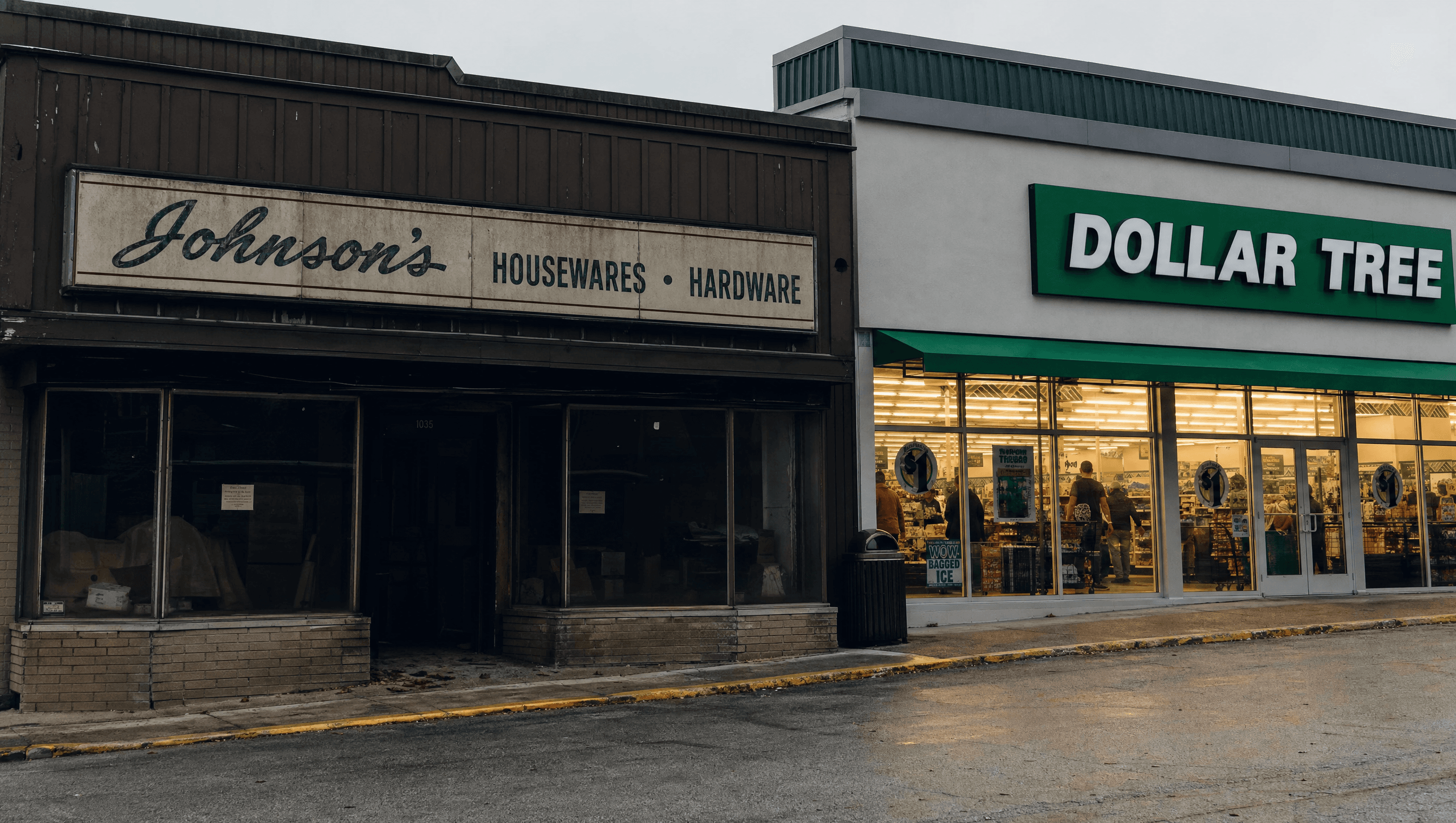
You claimed your Google Business Profile. You filled in the hours, uploaded a few photos, and added your phone number. That was three years ago.
Since then, you've been running your business. Serving customers. Keeping the lights on. The Google profile has sat there, still live, still showing your info, and you figured that was enough.
It isn't. And while you've been looking away, the algorithm has been making a judgment.
Google Reads Inactivity as Decline
A Google Business Profile isn't a directory listing that stays put once it's published. It's an active data feed that Google reads continuously. When a profile stops producing new signals, no recent reviews, no responses, no posts, no attribute updates, the algorithm doesn't treat it as stable. It treats it as declining.
This is the inactivity penalty. It's not a formal policy. It's the practical outcome of how Google's prominence signal works.
Prominence, one of the three core Local Pack ranking factors, is built from review volume, review velocity, response rate, and citation consistency. All of these are active. All of them decay without attention.
Meanwhile, the businesses that are adding reviews and responding to them every week are generating fresh signals constantly. Google doesn't need to demote you explicitly. It just needs to rank them higher. The result is the same.
The Four Ways a Neglected Profile Loses Ground
1. Review Velocity Drops to Zero
Reviews don't come on their own when things are going fine. Satisfied customers return to work. Dissatisfied ones open Google.
If you're not actively asking for reviews after each job, your incoming rate trends toward zero and negative. A profile that collected 50 reviews in its first year and zero in the second has flatlined. And 74% of consumers (BrightLocal, 2026) will dismiss those 50 older reviews as irrelevant anyway.
Velocity signals to Google that a business is actively trading. A dead velocity number is a decline signal, regardless of your historical star rating.
2. Posts Go Stale and the Profile Gets Flagged as Dormant
Google Posts are micro-updates published directly to your profile in search results. They're short-lived. Most expire within 7 days. Which means they're designed to reward consistent activity, not occasional bursts.
A profile with no posts in 30 or more days is categorized by the algorithm as dormant. A profile that posts twice a month, consistently, is signaling active operations. These aren't visible winners and losers in any obvious way. But over 3 to 6 months, the gap in rankings becomes visible.
The post doesn't need to be sophisticated. A promotion, a seasonal tip, a completed project photo. Anything that shows the business is open and moving.
3. Data Inconsistency Erodes Trust at the Algorithmic Level
Search engines cross-reference your business information across the web. Google checks whether your business name, address, phone number, and website URL appear consistently on other directories: Yelp, Apple Maps, Yellow Pages, local chambers, industry sites.
When those details conflict — "Smith Plumbing" on Google, "Smith Plumbing LLC" on Yelp, an old suite number on one directory and a new one on another — the algorithm registers the inconsistency as a trust signal failure. Your confidence score drops. Your ranking drops with it.
This kind of drift happens passively. A business moves offices. A phone number changes. The owner updates Google but forgets about the six other places the number lives. Two years later, the conflicting data is still pulling rank down.
4. Missing Attributes Exclude You from Filtered Searches
Google continuously rolls out new profile attributes: tags like "veteran-led," "women-owned," "online booking available," "wheelchair accessible," "free estimates." Consumers use these filters when searching. Businesses that haven't logged in to tag these attributes simply don't appear in those filtered results.
This is the quietest version of the inactivity penalty. You're not losing the search. You're not even showing up for it.
What This Looks Like in Practice
A roofing contractor in Murfreesboro. Established since 2014. Real business, real reviews, real customers. Ranked #3 in the Local Pack for "roofing contractor Murfreesboro" as recently as 18 months ago.
They got busy. Stopped responding to reviews. Posted twice in 2025, nothing since February. A competitor with half the review count started actively managing their profile, posting every two weeks, responding within hours, getting 3 to 5 new reviews per month from a post-job ask system.
The competitor is now ranked #2. The contractor is ranked #7.
Estimated share of local search clicks by map position
Source: industry click-through rate benchmarks for Google Maps results
That's not a knock on the contractor's work. It's the inactivity penalty in practice. Position #7 for a high-ticket trade in a competitive market means missing 85 to 90% of the inbound calls that keyword generates.
At $15,000 per roof, position #7 is expensive.
The Businesses Winning in Rutherford County Right Now
The top-performing service businesses in Smyrna and Murfreesboro share one operational reality: they treat their Google Business Profile the way they treat answering the phone.
Not because they love digital marketing. Because they understand that a missed call and an ignored review profile produce the same outcome: a customer who calls someone else.
The patterns are consistent across verticals:
Auto repair: Top-ranked shops ask for reviews at the point of checkout or pickup, not in a follow-up email that gets ignored. Their review velocity is steady because it's built into the workflow, not bolted on afterward.
HVAC: The businesses holding rank in competitive Murfreesboro aren't outranking Airstream's 1,700 reviews on volume. They're winning on recency and response speed. A new business with 60 recent, specific reviews and a 100% response rate is beating a dormant competitor with 200 old ones.
Home services: The defining differentiator in most trade searches isn't star rating. It's whether the business has an active post from the last 30 days and visible responses to reviews. That's the entire gap between position #2 and position #8 in most Rutherford County searches.
Reversing the Penalty Is Faster Than Building From Scratch
The good news: a neglected profile that was once well-ranked has residual authority to work with. Reactivating it consistently, posts, responses, new reviews, typically produces measurable ranking improvement within 30 to 60 days.
That's not a guarantee. Markets vary, competition varies. But the businesses that restart active management after a dormant period consistently recover faster than new profiles starting from zero, because the foundational data is already there.
The key is consistency. Two weeks of activity followed by another six weeks of silence produces the same dormancy signal. The algorithm doesn't care about bursts. It rewards sustained cadence.
Frequently Asked Questions
What happens to a Google Business Profile if it's inactive?
When a Google Business Profile stops receiving new reviews, responses, and posts, Google's prominence signal for that business gradually weakens. The profile remains live, but its visibility in the Local Pack decreases as competitors with active profiles are scored higher.
Does Google penalize inactive business profiles?
Google doesn't explicitly penalize inactivity, but it rewards activity. Because prominence is built from review velocity, response rate, and fresh content, a dormant profile will naturally fall in rankings as active competitors accumulate those signals. The practical effect is the same as a penalty.
How often should I post on my Google Business Profile?
2 to 4 posts per month is the effective minimum to maintain an active signal to the algorithm. Google Posts expire after 7 days, so posting weekly is the most effective cadence, but twice a month avoids the dormancy flag in most markets.
How long does it take to recover Google Maps rankings after inactivity?
Most businesses that resume active profile management see measurable ranking movement within 30 to 60 days. Businesses recovering from a dormant period typically move faster than new profiles with no history, because the foundational data is already there.
Does updating my Google Business Profile information improve my ranking?
Yes. Updating hours, adding photos, completing service categories, and filling in new attributes all signal an active, complete profile. Ensuring your Name, Address, Phone, and URL are consistent across all directories, not just Google, is a foundational ranking factor.
Is a Google Business Profile more important than a website for local rankings?
For Local Pack visibility, the map with three pinned results, your Google Business Profile is the primary ranking asset. A business with a strong, active profile and a mediocre website consistently outranks one with a polished site and a neglected profile in most service searches.
Lumien manages Google Business Profiles for service businesses in Smyrna, Murfreesboro, and La Vergne. If your profile has gone quiet, it's already costing you rank. Get a free audit to see where you stand.